
The ‘new alliance’: defence lobbying as routine governance
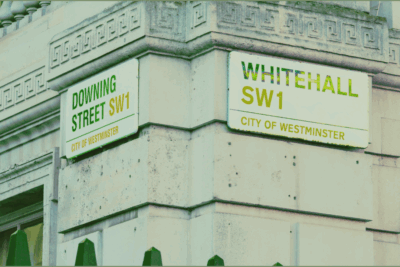
In June last year – on the same day as the Strategic Defence Review was published – James Purnell, the CEO of the lobbying firm Flint Global, attended a dinner with arms, tech and finance companies, the Business Secretary and government officials. After Purnell became Chief of Staff in Downing Street a year later, The Telegraph ran a story exposing the lack of transparency around the event.
Rather than a lapse in ethics by a now powerful government official, the Purnell dinner is an example of the ever-closer relationship between corporate industry – and its advocates – and those in government. While Westminster’s systems for transparency are flawed, the information that is in the public domain helps to reveal much about the extent of this relationship and the capture of governance by external organisations. No sector is more active in this than the defence and security industries which have consistently ploughed considerable resources into accessing and influencing, government, parliament and wider public debate.
What goes on behind the closed doors of lobbying and discussion meetings is hard to determine but there is no doubt that they have brought significant influence and policy results. There has been a shift away from competitive tendering for contracts and towards a ‘new alliance’ as the state and private arms companies work in partnership. The emerging framework of ‘One Defence’ suggests that traditional lobbying efforts are less necessary when the key players are sitting around the same table.
Confronting this blurring between the government and defence and security industries, and their influence within parliament and on the policy narrative, will require looking beyond transparency lapses and individual transgressions to reforming the relationship itself.
Contents
- A lobbying dinner and an ‘ethics lapse’
- From revolving door…
- …to open plan office
- Flint Global – an example of lobbying as ‘routine governance’
- Many meetings but little information
- Courting parliamentarians
- The ‘new alliance’ towards ‘One Defence’
- Manufacturing a wider consensus
- Challenging the capture
A lobbying dinner and an ‘ethics lapse’
In September, The Telegraph ran a story with the headline ‘Burnham’s right-hand man in ‘corruption’ row‘. It reported that in June 2025, James Purnell, then chief executive of corporate lobbying firm Flint Global and now Chief of Staff to Prime Minister Andy Burnham, had hosted a private dinner with Business Secretary Jonathan Reynolds and fourteen corporate and arms company executives.
Reynolds failed to declare the meeting in his entry in the register of ministers’ meetings. It was, however, recorded in the hospitality register, where Reynolds disclosed attending a dinner with Flint Global but completely omitted to mention the presence of the companies. When approached by The Telegraph, a spokesperson for the Department for Business, Innovation, Science and Trade stated that they ‘take transparency seriously’, blamed ‘an administrative error’ and stated that the record has since been corrected.
The commentary followed the usual script of accusations of corruption and ‘shadow lobbying’. The event was framed as an ethics lapse, an embarrassing failure of transparency, a standard ‘sleaze’ row stemming from the government’s failure to record the gathering correctly on ministerial meeting logs. The editorial focused on Flint Global’s lobbying history, the personal relationship between Purnell and Reynolds and Purnell’s subsequent journey to the heart of executive power in Downing Street.
Focusing on ‘bad apples’ or personal cronyism gives indirect support to the myth that the state and private arms companies are fundamentally distinct entities with clear boundaries which are only temporarily breached by transparency failures or regulatory loopholes or corrupted by individual greed.
This is the latest in a long line of ‘ethics lapses’ or corruption scandals around relations between arms companies and the government or parliamentarians. Prominent recent examples include the closure of the Defence Technology All-Party Parliamentary Group after it accepted money from an Israeli company – breaching the rules on funding from foreign governments – and Lord Dannatt’s suspension for ‘using his peerage to open doors for business interests’. Dannatt, former head of the British Army, was also implicated in the 2012 ‘generals for hire’ scandal yet has obviously failed to amend his ways.
While it’s heartening that irregularity in the defence sector still garners press coverage, treating these episodes as a series of lapses in the moral code of individuals falls far short of identifying the bigger problem. Purely focusing on ‘bad apples’ or personal cronyism gives indirect support to the myth that the state and private arms companies are fundamentally distinct entities with clear boundaries which are only temporarily breached by transparency failures or regulatory loopholes or corrupted by individual greed. Critics are reduced to focusing on demands for reinforced individual ethics processes and procedures, implying that a strengthened ministerial code or ACOBA (Advisory Committee on Business Appointments) process or ‘robust safeguards’ will somehow solve the issue.
The ‘ethics lapse’ narrative disguises the bigger story of how governance of defence has been captured by the ‘defence’ industry. The 2024 report by Campaign Against Arms Trade (CAAT) and World Peace Foundation (WPF) explores how the relationship between the government and the arms industry has become so close over the years that the clear boundaries between the two has been significantly erased. And in the last two years, with the political priority given to the military, the prime companies in this sector are operating more than ever as partners to government rather than contractors. This is captured in the language of a ‘new alliance’ and ‘One Defence’.
In addition to reform of the rules around lobbying and transparency, a far more structural and holistic type of reform is needed if this embedded influence is to be challenged and changed.
From revolving door…
A system where individuals move from public sector roles – such as government ministers, civil servants, or military officers – to private sector positions within the industries they previously oversaw, procured from or regulated, has been characterised as a ‘revolving door’. Data compiled by CAAT (page 35) found that 41% of senior Ministry of Defence (MoD) military and civilian staff who left public service between 2010 and 2021 moved directly into the arms industry. Within Defence Equipment and Support (DE&S) – the government body tasked with allocating the UK’s £300+ billion equipment budget – that proportion reached 59%.
The revolving door turns in reverse with similar consistency; secondments of personnel from BAE Systems, QinetiQ, Rolls-Royce, and Babcock find staff embedded directly within the MoD, civil service and departmental trade agencies (page 42, and data from 2024-26). At the UK Defence & Security Exports (UKDSE) for instance, industry staff operate inside government to market weapons systems to foreign governments, including in regions of immense instability, such as the Middle East or to numerous countries on the Foreign and Commonwealth Office’s list of nations facing severe human rights challenges.
…to open-plan office
As argued in the CAAT/WPS report, this relationship has morphed beyond the metaphor of the ‘revolving door’ into one symbolised by the ‘open-plan office’. Far from just lobbying government from the outside there is now an intertwining of industry and government: ‘It is not just a matter of one party influencing another, but of the boundaries between the two blurring and dissolving, to become public and private branches of the same national security establishment’.
In the ‘open-open office’ unprecedented levels of lobbying activities and close relationships are seen as just part of routine governance. It is supported by a prevalence of ‘soft influence’ within Parliament and beyond, in order to manufacture consensus, shape public debate, and legitimise the capture of government by the defence industry apparatus. This has led to a ‘new alliance’ between government and industry with large arms companies now actively involved in the formulation of industrial, strategic and procurement policy which help to guarantee their own interests and profitability.
Flint Global – an example of lobbying as ‘routine governance’
The private dinner hosted by the lobbying firm Flint Global last year provides an example of how one of the pillars of the open-plan office operates, with the arms industry enjoying unparalleled levels of access to government ministers, senior officials and others within the corridors of power.
The dinner was held the very same day in June last year that many major policy announcements were made in the Strategic Defence Review. Earlier that day there had been a political row – with concerns about insider trading – when the Review was seen by journalists and defence companies among others before it was presented to MPs.
The evening gathering brought together high-ranking government decision-makers, professional lobbyists and leaders from financial and industrial corporations. Hosted by Flint Global, the guest list included its CEO James Purnell and two other senior executives, and Business Secretary Jonathan Reynolds along with a Department for Business and Trade special adviser and a private secretary. Also attending were fourteen top executives spanning global defence and aerospace, commercial logistics, finance, and engineering.
While official documents released to the media were heavily redacted, The Telegraph reported (archived version) that the agenda moved from networking drinks and speeches from Reynolds and Purnell, to discussion of ‘regulatory issues and the need for more “risk appetite”, as well as research and development tax credits and the UK’s competition watchdog’. The event led to subsequent follow-up meetings to address the companies’ ‘specific issues’.
When exposed in the press, the official response was to dismiss the event as a ‘routine meeting with industry stakeholders’.
The scale of public money flowing to the dinner’s corporate attendees illustrates the potential implications of this access. The Telegraph reported that, following Labour coming to power, the corporate participants at the dinner have secured 186 public contracts valued at a cumulative £3.13 billion. Leonardo has received £1.84 billion in government commitments, Boeing £1.1 billion, QinetiQ £127.1 million and Rowden Technologies £38.3 million.
When exposed in the press, the official response was to dismiss the event as a ‘routine meeting with industry stakeholders’. In doing so, the underlying reality was inadvertently admitted; that un-minuted commercial meetings with interested parties discussing government policy and industrial priorities are the norm in governance involving defence.
Many meetings but little information
The only official record of the event was in Jonathan Reynold’s entry in the minister’s hospitality register, where it is listed as a dinner with Flint Global with the value of £75. No mention is made of the presence of the corporate executives.
While Flint Global is listed on the official register of consultant lobbyists, its record includes the names of only two clients in the five years from 2021. Flint Global declared no lobbying activity during June 2025, the month of the dinner. As CAAT point out (page 22), the very narrow definition of ‘consultant lobbyist’ and the very limited information that is required to be provided to the Registrar of Consultant Lobbyists, means the register provides ‘limited transparency’. Transparency International estimate that the statutory consultant register covers at most 4% of lobbyists.
Between 2012 and 2023, the three private companies holding the most one to one meetings with ministers and Prime Ministers were arms companies.
Neither does the dinner appear in the data on lobbying meetings held with ministers. But this data does show that Flint Global have been involved in 18 meetings with ministers since April 2020. This includes a meeting in June this year – again between James Purnell and Jonathan Reynolds – ‘to discuss the King’s Speech and legislative programme’. Purnell was appointed to the role of the Prime Minister’s Chief of Staff less than two weeks later.
While the data on meetings between ministers and external interests captures only the topic rather than the detail of meetings – and is subject to omissions as the Flint Global dinner demonstrates – it does point to which organisations external to Westminster have been most active with the most influential people in government. Between 2012 and 2023, the three private companies holding the most one to one meetings with ministers and Prime Ministers were arms companies (page 24). One of these, BAE Systems, was present at over 600 meetings with ministers and more than any other private company in that period.
In total, the current systems for tracking lobbying presents a far from complete or detailed picture. The Downing Street review commissioned earlier this year in the wake of the scandal around Peter Mandleson, Global Counsel and Jeffrey Epstein, has identified a long list of recommendations to reform lobbying and transparency rules. As Spotlight on Corruption state, if the recommendations made by the Ethics and Integrity Commission are accepted and passed into legislation by the government, it ‘would be transformative for British political culture’.
Courting parliamentarians
As we have previously reported, some of the world’s largest arms companies sponsor a number of All-Party Parliamentary Groups (APPGs). These are groups convened by individual MPs and Lords to develop understanding across a range of subject areas among other parliamentarians. The AUKUS APPG, which aims to ‘raise awareness of the Australia, United Kingdom, United States (AUKUS) security pact’ is heavily sponsored by the arms industry with £125,000 from three companies in this parliament. The APPG for the Armed Forces has received £60,000 from six companies in this parliament and between 2010 and 2024 this group received at least £834,265 in sponsorship from large defence contractors. The six that currently sponsor this group have contributed nearly £400,000 over the years. Neither of these groups publish the list of parliamentarians who are their members – unlike other APPGs – and very little about what they do is in the public domain. Unfortunately, the Ethics and Integrity Commission’s recommendations do not extend to improving the transparency around APPGs.
The arms industry also funds the Armed Forces Parliamentary Trust, which runs an annual Armed Forces Parliamentary Scheme (AFPS), immersing parliamentarians directly in the military. Little information about the scheme is made public but our research has found that, despite previous claims that the MoD has no direct connection to the scheme, it views the AFPS as a way to influence parliamentarians. As well as serving the interests of the military, the AFPS also maintains the ‘social license to operate’ of the sponsoring arms companies, by allowing senior executives to socialise with parliamentarians. In the words of James Gray – a Conservative MP up until 2024 and the now-retired long time Chair of the Scheme – it provides opportunities for the scheme’s sponsors to ‘get the warm feeling’ from MPs.
The ‘new alliance’ towards ‘One Defence’
With yet another turn of the revolving door came Purnell’s appointment as the new Prime Minister’s Chief of Staff in June this year. This appointment exemplifies how close the relationship between Labour in government – and the Tories before them – as well as members of the House of Lords and special advisors have become with the lobbying industry and their corporate clients more widely.
It can also be seen as an example of the new defence ‘alliance’ in practice – the logical conclusion of years of government and defence industry coordination that has dismantled much of the usual competitive tendering for government contracts while merging the interests of private arms companies with government apparatus.
The 2021 Defence and Security Industrial Strategy signalled a move away from competition as the default for MoD procurement and towards partnering and collaborative arrangements. The Defence Command Paper of 2023 again raised the status of the arms industry in stating that, ‘We will move beyond the traditional customer-supplier relationship… [that] binds the MOD and industry into a joint endeavour’. It continued: this ‘new alliance will require senior Defence leaders to take the time to develop enduring relationships with key industry executives, deliberately and regularly sharing insights and information’.
This system was further codified in the 2025 Defence Industrial Strategy. While on the one hand the strategy aims to initiate competition within the defence sector, it also states, ‘There is power in convening as One Defence’, with the justification that, ‘Our defence sector must become more integrated; acting as one defence to keep our nation safe and provide the conditions for the UK economy to thrive.’
The ultimate expression of this merging of interests is seen in the Defence Industrial Joint Council (DIJC), formed in 2025. The DIJC unites senior government and Ministry of Defence officials with a broad group of major arms and tech companies, SMEs (small and medium-sized enterprises), capital investors and trade unions. The first meeting of the joint council was chaired by BAE Systems’ CEO Charles Woodburn and John Healey, the then Defence Secretary. Healey stated that the DIJC would bring government and industry together to forge a ‘new and improved partnership [..] while also bringing trade unions and investors closer to the heart of defence decision-making’.
In this ‘new alliance’, under this doctrine of ‘One Defence’, maintaining the balance sheets and production capacity of favoured companies are equated with national security.
Recently, the MoD credited the DIJC and the newly created National Armaments Director with enabling ‘better access and faster delivery’ for arms exports, expediting the licensing of arms to Middle East ‘partners’ by working with industry which ‘identified barriers in export approvals’, and leveraging ‘government-to-government mechanisms and closer coordination with the Export Control Joint Unit’. While details of the barriers identified by industry were not disclosed, there is a strong implication that the UK government are effectively working on behalf of industry, bypassing the standard commercial vetting process, using diplomatic assurances to underwrite the risk and push the equipment out of the door faster. The MoD trumpets the benefits of this approach which ‘improves industry relationships…ensures rapid and resilient delivery of capability to the warfighter’, and – by championing the finances of the arms industry – ‘supports investment confidence’.
In this ‘new alliance’, under this doctrine of ‘One Defence’, maintaining the balance sheets and production capacity of favoured companies are equated with national security. The CAAT-WPF report (page 70) found that major arms companies generate an average Return on Invested Capital (ROIC) that consistently outperform broader FTSE benchmarks. Crucially, they do so while pushing the risks, both technical and financial, back onto the public. Cost overruns, delivery delays, and defects on major programmes are routine – as widely reported and repeatedly noted by the Public Accounts Committee – and result in no penalties for the companies, financial or otherwise. Instead, failures are absorbed through renegotiated deals and extended maintenance and support contracts. This is a classic example of corporate welfare, socialising the risk while privatising corporate and shareholder profits, deepening the wealth inequality crisis.
Manufacturing a wider consensus
Beyond Westminster, the manufactured consensus is reinforced in public discourse and the media by narrow narratives pushed by a network of defence and foreign policy think tanks, high-profile military and political figures, and sections of the media. A number of the most prominent institutions shaping national discourse – such as the Royal United Services Institute (RUSI), the International Institute for Strategic Studies (IISS), and the Council on Geostrategy – all receive substantial financial backing from the arms corporations profiting from increased defence spending.
When the public and Westminster are led to believe that ‘security’ simply means throwing more money at weaponry or the simplistic idiom that ‘if you want peace, prepare for war’, regular meetings and dinners between the Business Secretary and arms bosses stop looking like scandals.
At the IISS, the highest-tier corporate donors consist of arms manufacturers and tech corporates allied to defence and security. These are also well represented on the list of donors to RUSI and to the Council on Geostrategy, which provide the secretariat services for the aforementioned AUKUS APPG. The perspectives of these institutions are routinely platformed within Parliament and across the media, rarely, if ever, mentioning their partnership with arms companies. Staffed by governing councils and research fellows drawn from industry-aligned retired military generals, former defence secretaries and advisors, they broadly advocate from the narrow viewpoint of militarised security.
The ideological capture of political and public debate by think tanks and other arms trade aligned voices give politicians and civil servants incentive to treat arms companies as partners rather than suppliers. When the public and Westminster are led to believe that ‘security’ simply means throwing more money at weaponry or the simplistic idiom that ‘if you want peace, prepare for war’ that prefaced last year’s Strategic Defence Review, regular meetings and dinners between the Business Secretary and arms bosses stop looking like scandals. Instead, it allows for such a gathering to be dismissed as a ‘routine meeting with stakeholders’.
Challenging the capture
Ultimately, the private arms industry is driven by the primary guiding motivation of shareholder profit. To secure it, the big players in the industry and their representatives deploy a highly successful strategy of capturing the narrative and hard lobbying. By helping to reduce understanding of the axiom that ‘the first duty of government is to protect its citizens’ to a narrow militarised imperative, the influence of the arms industry has made their capture of governance and scrutiny around security issues inevitable.
The appointment of the lobbyist James Purnell to run Downing Street, a role of massive influence, is not just the ‘next big scandal waiting to happen’, it is what the ‘open-plan office’ looks like in practice. Confronting this dynamic – the blur between government and defence and security industries, and the arms industry’s influence within parliament and the policy narrative – will require looking beyond just recruitment procedure, transparency processes or individualised actions to reforming the relationship itself. It will require ending non-competitive procurement guarantees, challenging industry funded parliamentary groups, and removing corporate lobbyists and secondments from the civil service.
Above all, it now requires interrogation of the ‘One Defence’ doctrine – which invites weapons manufacturers into the heart of government – and a challenge to the well funded public influence machine promoting a militarist dogma that insists that the interests of the profit-driven arms industry are vital for national security.
See more: military in society, UK Parliament, arms industry, democracy
Like what you read?
> Sign up for our newsletter or blog notifications
> Support our work – from just £2 a month