A school trip to an arms fair
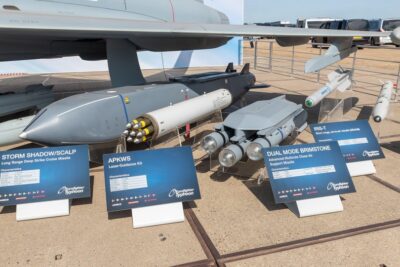
The end of July saw the biennial Farnborough International Airshow take place, under the guise of a celebration of all things aerospace. The reality is that it is an event where the world’s largest arms companies gather and exhibit their equipment and make multiple multi-million-pound deals.
Over the week, a number of UK ministers gave keynote speeches which sought to reassure the industry about levels of government military spending and the development of new ‘warfighting capabilities’. Between Monday and Thursday, the Farnborough Airshow operates as a closed-door trade show. Away from public scrutiny, multi-million-pound arms deals are made.
The same tarmac that hosts arms companies exhibiting to delegates from authoritarian states with horrendous human rights records, now also hosts school children, teachers and aspiring young people.
Having secured their lucrative defence contracts during the trade-only days, the industry turns its attention on Friday to public relations and securing its future labour pipeline with the gates opening for the ‘Pioneers of Tomorrow’ public day. The same tarmac that hosts arms companies exhibiting to delegates from authoritarian states with horrendous human rights records, now also hosts school children, teachers and aspiring young people.
The ‘Pioneers of Tomorrow’ event is advertised to the public as an opportunity to ‘discover, experience, explore the world of aerospace’ and to ‘experience exhilarating flying displays, unlock career opportunities, get involved in hands-on STEM [Science Technology Engineering and Maths] activities’. There is no mention of the fact that at least half of the 1,600 exhibitors at Farnborough are defence companies looking to capitalise on increased uncertainty and global military spending resulting from the conflicts in Ukraine and the Middle East.
When looking at the list of the largest 100 global arms producers compiled by SIPRI (excluding China and Russia), over half were present at the airshow. This includes firms with no involvement in civilian aviation and those directly complicit in the genocide in Gaza such as Elbit Systems, Israel Aerospace Industries, and Rafael.
The listings for these events on Farnborough’s website and event app have no mention of the nature of the businesses that run them, offering little to help parents or educators to make informed decisions.
The public were invited to join careers events and watch the busiest day of live aircraft displays. Over three-quarters of the aircraft on display were military and dual-use aircraft. Alongside less ethically-challenged organisations, arms companies and the military provided military flight simulators and STEM engagement activities aimed at schools and children as young as five. The listings for these events on Farnborough’s website and event app have no mention of the nature of the businesses that run them, offering little to help parents or educators to make informed decisions.
Leonardo, the 12th largest arms company in the world, run the ‘Infra-red Camera Experience’ inviting children aged 5 to 17 to use infra-red cameras and ‘take home a printed infra-red selfie’. Were participants informed of the role that infra-red cameras may play in projects Leonardo were touting at Farnborough, such as the autonomous helicopter drone Proteus?
The most transparent listing might have been QinetiQ’s ‘Banshee speed builds & Future Flyers Dress Up’. Those with prior knowledge may know that Banshee is a series of British target drones developed for air defence system training, but footage of the event shows a sanitised activity with young children dressing up with military helmets, making model planes and using flashy VR headsets.
How many of the school children watching will know that such aircraft have destroyed many schools and thousands of other young lives abroad?
These activities, as witnessed by ForcesWatch at other public events such as Arms Forces Day, rarely mention the realities of what the companies do, focusing instead on purely positive ideas around humanitarian missions and technical advancement. The grim realities of warfare are sanitised, abstracting the end-goals of surveillance and destruction into harmless, fun, interactive ‘problem-solving’ exercises for children.
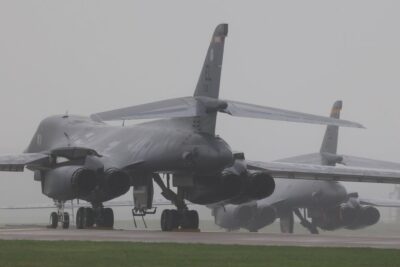
The aircraft displays included a Eurofighter Typhoon and a F-35, heavily used in air assaults on Yemen and Gaza respectively. How many of the school children watching will know that such aircraft have destroyed many schools and thousands of other young lives abroad?
The event was entirely free for young people up to the age 21, with discounted tickets for adults involved in education, furthering the corporate and arms industry capture of educators. We argue that weapons manufacturers should not be allowed to promote themselves to children and young people in the guise of providing STEM education. Targeting an audience of children and STEM career hopefuls at what is effectively an arms fair is incredibly unethical.
Education and STEM skills should fundamentally be about empowering young people to help solve the issues and crises we are facing nationally and globally rather than pushing them towards industries which perpetuate them.
By inviting youth in for free and discounting for educators, the arms industry gains a cheap and effective public relations shield with the bonus of ensuring that a young person’s first association with immensely controversial companies like BAE Systems, Qinetiq, or Leonardo is one of excitement, discovery, and ‘future skills’ rather than destruction, complicity and moral-harm. Ultimately, education and STEM skills should fundamentally be about empowering young people to help solve the issues and crises we are facing nationally and globally rather than pushing them towards industries which perpetuate them.
When providing educational and other activities to children and young people, rigorous safeguarding and risk assessments are routinely made to protect children from physical or emotional harm. We must also consider the ethical and moral risks of corporate interests in education spaces – particularly such destructive ones – and the impact that has upon young people and wider society.
See more: military in schools/colleges, military in society, weapons & young people, STEM, arms industry
Like what you read?
> Sign up for our newsletter or blog notifications
> Support our work – from just £2 a month