‘These are children, General’
Introduction and summary
This week it has been reported that the UK government intends to open a second training establishment for recruits to the armed forces aged under 18, as a ‘companion’ to the Army Foundation College (AFC) in Harrogate. A government source spoke of the ‘amazing opportunities for young people, especially those from working-class backgrounds’ with the college helping ‘to maximise defence’s contribution to solving the Neets challenge’. They didn’t address the UK’s position as an outlier in continuing to recruit children as young as 16 into the armed forces or the many concerns that have been raised about welfare issues at Harrogate.
Also this week, the BBC has published a detailed investigation of abuse of four girls at the ‘Army teen college’ in Harrogate in the last five years. Now young women, they say that their traumatic experiences show that, ‘the college has a dangerous culture of misogyny and sexual violence.’ Evidence of this culture, and other unacceptable behaviours at AFC Harrogate has been growing in recent years yet far too little attention has been paid to the experience of these most vulnerable recruits. While the negative experience that many women have had in the forces has finally received significant attention with the publication of the report of inquiry on Women in the Armed Forces in 2021, how this impacts girls who join up aged 16 and 17 has been given much less focus.
In their follow-up monitoring since 2021 on the experience of women in the armed forces, Parliament’s Defence Committee has received a series of powerful evidence reports from the Child Rights International Network that have been instrumental in developing their awareness of the negative experiences of many girls, and also boys, aged under 18 who have been through training at AFC Harrogate.
This growing body of evidence adds new urgency to the question of whether the military is a safe place for under 18s. At the very least, the Defence Committee must follow the concern they have demonstrated in recent evidence sessions in Parliament and push for an inquiry into welfare at AFC Harrogate conducted by child rights and welfare experts and with full independence from the MoD and armed forces.
Contents
- A welcome focus on the experience of women in the armed forces
- Young people as an afterthought
- Presenting the evidence on the experience of child recruits
- How the Army deals with prohibited relationships and unacceptable sexual behaviours
- Blaming society – is enough responsibility taken by the Army?
- Safeguarding effectiveness at AFC Harrogate
- Are policy changes having an impact?
- Children in uniform: more evidence of abuse
- Risks of physical harm for under 18s
- Where are the monitoring organisations?
- The armed forces’ duty of care to young people
- Is the military a safe place for under 18s?
A welcome focus on the experience of women in the armed forces
The Atherton Report, Protecting Those Who Protect Us: Women in the Armed Forces from Recruitment to Civilian Life, was published by the House of Commons Defence Sub-Committee in July 2021, representing one of the most significant examinations of women’s experiences in the UK Armed Forces to date. Led by former MP Sarah Atherton, the inquiry drew evidence from over 4,000 serving and former female personnel, including written evidence, surveys, and oral evidence sessions. The aim of the inquiry was to investigate the experiences of female personnel throughout their careers in the forces, from recruitment and life within the military to their transition into civilian society.
Several challenges which persistently affect women in the armed forces were examined, including issues in recruitment and retention, sexual offences, issues within the complaints system, bullying and harassment, the prevalence of mental health disorders, and poor employment outcomes following transition. Additionally, the inquiry focused on broader issues relating to pensions, housing, and general well-being. Overall, the inquiry highlighted numerous systemic barriers faced by serving and former servicewomen, raising significant concerns about the culture embedded within the services.
The inquiry, along with its subsequent report and yearly committee hearings, has had a significant impact in providing female personnel a chance for their voices to be heard, along with shedding light on institutional matters that might otherwise have been overlooked. However, despite the substantial evidence submitted to the Defence Committee concerning the welfare and treatment of young people in the services, little attention has been given to recruits who join the services under the age of 18, particularly young girls. While efforts have been made to improve inclusivity and safeguarding within the services since the report’s release, concerns remain that change has been slow and that young recruits still face the same challenges initially identified.
Young people as an afterthought
The inquiry found that bullying, harassment, and/or discrimination was experienced by 58% of serving women, along with 64% of female veterans, whilst serving. 84% of respondents believed that women face additional challenges in the armed forces compared to men. The findings also highlighted substantial distrust of the complaints service, with several women believing that reporting another individual would harm their career, citing the chain of command as a barrier to justice. Taking all of the findings into account, the report suggested that the MoD and the UK armed forces were failing to protect female personnel.
Although substantial evidence was submitted to the Defence Committee that raised concerns about younger recruits, the initial report made minimal reference to them.
The report made several recommendations on issues regarding sexual offences, the complaints system, recruitment and retention, families and childcare, equipment, and the veteran community. The Ministry of Defence (MoD) accepted 33 of the recommendations while four were partially accepted and three were rejected. Based on the accepted recommendations, several reforms have been introduced. Sexual misconduct complaints have been moved outside the direct chain of command, new policies on sexual exploitation and unacceptable sexual behaviours have been introduced, a new ‘zero-tolerance’ policy has been introduced, and recruitment targets have been increased. The Armed Forces Bill currently going through Parliament introduces improvements to the service complaints system but campaigners continue to call for further reforms, and the Defence Committee is continuing to monitor the issue with follow-up evidence sessions.
While it is both encouraging and promising that women in the armed forces are receiving recognition and their voices are heard, it is important to note that young girls, as well as young recruits in general, are being overlooked. Although substantial evidence was submitted to the Defence Committee that raised concerns about younger recruits, the initial report made minimal reference to them. Young recruits were mentioned only a small number of times in the follow-up 2023 oral evidence session, although recognition increased significantly during the follow-up 2025 and 2026 oral evidence hearings. While this remains promising, there remains serious concerns surrounding the mental and physical safety of young recruits who enlist in the armed forces under the age of 18.
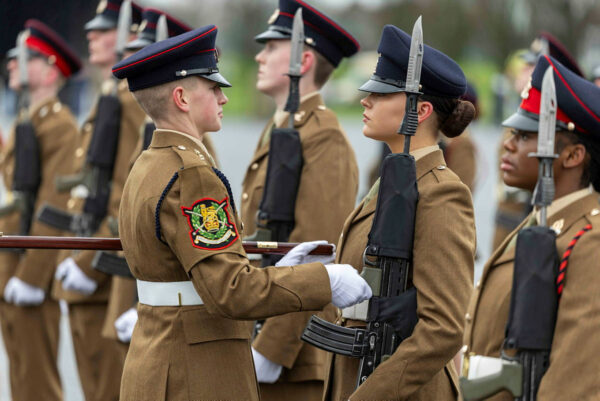
Army Foundation College (Harrogate) graduation parade. Photo: UK MOD © Crown copyright 2026
Presenting the evidence on the experience of child recruits
Over the course of this inquiry, Child Rights International Network (CRIN) has submitted extensive evidence to the Defence Committee concerning child recruits in the armed forces. In its written evidence for the initial 2021 report, CRIN presented several statistics relating to the Army Foundation College (AFC) in Harrogate, including incidents of sexual assault, sexual harassment, and violent behaviour, highlighting that young recruits who enter the armed forces under the age of 18 face higher risks of sexual harassment and assault. With evidence to support this, CRIN concluded that young girls entering the forces face risks that cannot be safely managed. CRIN emphasised that as long as the UK armed forces continue to enlist under 18s, they must implement a protocol which addresses violence, including sexual harassment and assault, against this age group within the civilian police and justice system.
CRIN submitted further evidence to the Defence Committee’s follow-up monitoring in 2022 concerning the welfare of girls aged between 16 and 17 and a half at AFC Harrogate. This evidence comprised facts and statistics on issues such as bullying, sexual misconduct, injury, and mental health, along with findings from AFC Harrogate’s Project Athena study of female recruits conducted in 2021. This evidence shows that numerous instances of sexual offences were reported, revealing that girls face a tenfold risk of sexual abuse compared to adult female personnel, based on MoD records of police investigations. Alarmingly, over one in ten girls in the UK armed forces had experienced sexual offences in the year prior. Evidence on other aspects of sexual abuse was also submitted, including staff convictions for physical or sexual abuse at AFC Harrogate, as well as significant risks to both physical and mental health of young girls.
How the Army deals with prohibited relationships and unacceptable sexual behaviours
In the 2023 oral evidence session, Andrew Murrison, former Minister for Defence People and Families, and British Army officials confirmed that sexual relationships between instructors and junior recruits in training were prohibited, and would result in the instructor’s dismissal from the armed forces. A recurring topic of conversation throughout the oral evidence hearings over the years has focused on the ‘zero-tolerance’ policy implemented by the forces, particularly regarding unacceptable sexual behaviours. However, evidence showed that out of 56 personnel who had engaged in unacceptable behaviours under the new zero-tolerance policy, 44 had been retained in service, leading MPs to question the policy’s credibility. The Committee argued that the term ‘zero-tolerance’ appeared to be inconsistent with how the policy was applied, given the retention of offenders. As a result, considerable discussion focused on what the zero-tolerance policy actually means in practice.
The uncertainty surrounding the zero-tolerance policy became particularly evident when MPs questioned behaviours that are not classed as criminal offences or forbidden instructor-recruit relationships. In 2023, military officials stated that inappropriate sexual comments and other forms of unacceptable behaviours are assessed on a case-by-case basis, and while administrative action is possible, removal from training establishments or dismissal from the services is not automatic. Additionally, discretion may be applied, mitigating and aggravating factors are considered, and the wishes of the victims may influence the outcome in some non-criminal cases. Expressing concern about the threshold for dismissal, MP Derek Twigg questioned Murrison on whether offences such as unwanted sexual banter by instructors towards junior recruits would warrant dismissal from the services, but little clarity was offered on the threshold for disciplinary action.
Army officials were questioned about how many complaints had been made about bullying, sexual harassment, and assault in the previous two years at AFC Harrogate by junior recruits, but they were unable to provide any information.
Similar concerns resurfaced in the 2025 oral evidence hearing, when Twigg questioned British Army General Sir Roly Walker about the consequences of unacceptable sexual behaviours by instructors towards junior recruits. Clarification was sought on whether these behaviours during training would lower the threshold for dismissal, and whether instructors would automatically be removed from the training establishment or discharged from the services. Following a long discussion, it was established that if instructors demonstrate unacceptable sexual behaviours towards junior recruits, it is an option to have them removed from the establishment following administrative action, but removal is not automatic.
However, General Walker did state that unwanted sexual banter would constitute an unacceptable sexual behaviour, and if a complaint was proven, it could result in discharge from the forces. Additionally, he stated that four instructors had been discharged from AFC Harrogate for engaging in unacceptable sexual behaviours in the previous 12 to 18 months. Nevertheless, Walker confirmed that decisions regarding disciplinary action continue to consider mitigating and aggravating factors, reinforcing the conclusion that there remains no clear or automatic regulations on how the armed forces deal with such cases. Army officials were questioned about how many complaints had been made about bullying, sexual harassment, and assault in the previous two years at AFC Harrogate by junior recruits, but they were unable to provide any information.
Blaming society – is enough responsibility taken by the Army?
Another theme running through the oral evidence sessions is the British Army’s tendency to situate issues surrounding misogyny and unacceptable behaviours within trends in wider society. Army officials repeatedly stated that junior recruits arrive at the training establishments with specific attitudes and experiences, shaped by wider society. In the 2026 oral evidence hearing, General Walker, the head of the British Army, argued that social media, the ‘manosphere’, and increasing visibility of misogynistic attitudes have influenced the views of junior recruits regarding women and relationships. Additionally, Walker referred to recruits arriving at training establishments with previous exposure to drugs, alcohol misuse, domestic abuse, and violence.
While these statements emphasise the challenges faced by the armed forces’ training establishments, they also raise questions about institutional responsibility. While Army representatives refer to alcohol misuse and violence exposure that junior recruits may experience before arriving at training, both alcohol consumption and violence occupy a distinctive place within the armed forces itself. Additionally, evidence has highlighted concerns about staff conduct within training institutions, raising questions as to whether certain issues stem from institutional failures rather than attitudes and behaviours in wider society. Focusing solely on the background and attitudes of junior recruits risks diverting away from institutional concerns, such as staff behaviour, safeguarding failures, and military culture. The themes discussed in the 2026 oral evidence session largely reflect a continuation of debates first raised in 2023 and revisited in 2025, suggesting that numerous concerns remain unresolved.
Safeguarding effectiveness at AFC Harrogate
Throughout the oral evidence sessions, persistent concerns regarding the safeguarding of junior recruits at AFC Harrogate were raised, particularly concerning girls under the age of 18. In 2025, Tan Dhesi MP stated that 37 girls were victims in sexual offence cases opened by the service police in 2021. Shockingly, this figure represents 12.8% of all young girls in the forces, compared to 1.2% of women in the wider adult service population. Based on these figures, the committee argued that there was a serious safeguarding problem involving vulnerable, young female recruits.
Army officials did not deny that incidents had occurred at AFC Harrogate, and Alistair Carns, the Minister for Veterans and People in 2025, emphasised that all allegations of inappropriate behaviour at the college are automatically referred to the police, under the armed forces’ zero-tolerance policy. However, following the confusion about what the zero-tolerance policy means in practice, concerns remained that the number and scale of incidents at AFC Harrogate point to significant safeguarding issues that require intervention.
In 2026, questions surrounding the effectiveness of safeguarding protocols and procedures became more prominent. Emma Lewell MP challenged the assumption that the existing procedures for reporting inappropriate behaviours were actually accessible for vulnerable recruits, arguing that while safeguarding systems formally exist, they may remain difficult to access in practice. Army officials outlined several routes to report unacceptable behaviours, including contacting the police, using helplines, reporting concerns to welfare staff, and speaking with training instructors.
MPs questioned whether such options were realistically available to young recruits in the early stages of training, due to restricted mobile phone access and limited freedom. Concerns were also raised about how junior recruits are expected to report specific incidents to members of staff at AFC Harrogate, when some allegations involve staff members themselves. These concerns followed evidence showing that over the five years prior, North Yorkshire Council received 89 safeguarding notifications regarding staff at the training facility.
The MPs’ concerns were not simply about whether reporting systems existed, but whether frightened and vulnerable junior recruits knew about them, trusted them, and could use them in practice.
Lewell challenged General Walker on the handling of safeguarding referrals involving staff at AFC Harrogate. After questioning whether recruits had been subjected to further abuse before incidents were reported, Lewell emphasised the vulnerability of the recruits, stating, ‘These are children, General’. Such concerns were acknowledged by Army officials, who stated that the Children’s Commissioner had recently visited AFC Harrogate, although the report is yet to be published.
From this discussion, it is clear that safeguarding protocols in AFC Harrogate must be evaluated. The MPs’ concerns were not simply about whether reporting systems existed, but whether frightened and vulnerable junior recruits knew about them, trusted them, and could use them in practice. While Army officials maintained that multiple safeguarding protocols were in place and that reporting routes were available, the Committee argued that the evidence heard within the session failed to demonstrate that these mechanisms were actually accessible to young recruits most in need of protection.
The committee raised further concerns about whether safeguarding standards at AFC Harrogate should be examined against those expected in other residential settings, such as boarding schools, rather than solely through a military framework. As stated by Lewell, ‘the safeguarding alerts in the other residential colleges are nowhere near as high as this’, demonstrating that, ‘there is clearly something not right…there is something clearly going awry at the college, because time and time again, there are so many alerts.’ Reflecting on these concerns, Tan Dhesi concluded that the situation at AFC Harrogate remains unsatisfactory, leaving unresolved the question of whether children at the training college are protected to the same standard as those in comparable educational institutions.
Are policy changes having an impact?
Since the 2021 report, certain efforts have been made to improve the lives of women and girls in the services. The zero-tolerance policy was announced in 2022, with an aim of tackling unacceptable sexual behaviours. The policy states that personnel found guilty of sexual offences are administratively discharged, sexual relationships between instructors and recruits in training would result in the instructor’s dismissal, and the recording of misconduct to ensure that repeat offenders are identified and removed from the services. However, as discussed in the oral committee hearings, the implementation of the zero-tolerance policy appears complex, with no clear understanding of how it works in practice.
Reported by Army officials in the 2025 oral committee hearing, 500% more time is now dedicated to training young recruits about consent, values and standards, acceptable and unacceptable behaviours, and safeguarding expectations during the initial weeks of training at AFC Harrogate. While this represents a significant intervention, several concerns were raised during the oral evidence sessions regarding staff conduct at the training college, rather than a sole focus on recruits’ behaviours. Additional measures implemented since the inquiry include enhanced safeguarding procedures, safeguarding reviews, and pre-arrival education on values and standards.
While it is positive that various reforms and safeguarding measures have been introduced within the armed forces to address concerns relating to women and girls, evidence suggests that serious issues continue to occur for children in the armed forces.
In response to safeguarding concerns, the Violence Against Women and Girls (VAWG) taskforce was established in 2025 to address these issues. The taskforce applies to female personnel across the entire armed forces, aiming to address the cultural and behavioural factors of unacceptable sexual behaviours. As reported in a parliamentary question, phase 1 of the taskforce is expected to be operational at the end of 2026. Also in 2025, a new tri-service complaints programme was introduced that will refer the most serious complaints involving bullying, discrimination, and/or harassment to an independent team outside the usual single-service chain of command.
While it is positive that various reforms and safeguarding measures have been introduced within the armed forces to address concerns relating to women and girls, evidence suggests that serious issues continue to occur for children in the armed forces.
Children in uniform: more evidence of abuse
In 2024, CRIN published Children in uniform: A decade of abuse at the Army Foundation College, a chronological report highlighting each known account of abuse from instructors and recruits at AFC Harrogate between 2014 and 2024.
Among the several incidents documented by CRIN, particular attention is given here to those that have occurred since the Women in the Armed Forces inquiry began. Between November 2020 and December 2023, 15 internal complaints of violent behaviour by AFC Harrogate staff were recorded on the Army’s system. Several AFC Harrogate instructors have been convicted of physical and sexual offences towards recruits since 2021, including instances of rape, serial sexual exploitation, unknown sexual offences other than rape, and physical abuse. Additionally, a former AFC recruit was convicted of sexually assaulting another female recruit who was under the age of 18.
Between July 2022 and August 2023, 13 alleged sexual offences which occurred at AFC Harrogate were reported to North Yorkshire Police, including nine cases of rape, two of sexual assault, and two of voyeurism. Findings into the suicide of 19 year old gunner Jaysley Beck reported that one of her instructors at AFC Harrogate had groomed and initiated a sexual relationship with her from when she was 16 years old, and, in 2025, another former Army Sergeant Major pled guilty to sexually assaulting Beck at Larkhill military base, where she took her own life.
Additionally, through a range of sources, openDemocracy uncovered other incidents at AFC Harrogate between 2018 and 2025. These include 24 crimes recorded by North Yorkshire Police in the first six months of 2025, five of which were sexual offences. Additionally, an average of 20 self-harm incidents are recorded at the college each year, and 474 complaints of physical violence against junior recruits have been recorded since 2018, averaging 62 incidents per year.
CRIN’S written evidence submitted to the inquiry in 2026 raises further concerns. Between 2021 and 2024, the service police conducted 122 investigations into sexual offences involving junior recruits under the age of 18. Further evidence shows that between 2023 and 2025, there were 37 allegations of sexually inappropriate behaviours, such as rape, sexual assault, sexual harassment, and indecent images of children, alongside 34 allegations of bullying. However, during the same time frame, fewer than five members of staff were accused of sexually inappropriate misconduct, and less than 10 were accused of bullying.
Risks of physical harm for under 18s
Along with the concerns already mentioned, significant questions have been raised surrounding the high risk of physical injury faced by young recruits, particularly young girls.
In the initial Women in the Armed Forces report, evidence was documented from servicewomen who discussed a persistent lack of equipment designed for the female body. Participants reported that ill-fitting body armour and other equipment could create immediate risks of physical injury, along with inadequate facilities and systems for female urination which resulted in some servicewomen deliberately dehydrating themselves, therefore creating additional health risks. The military women’s charity, Salute Her, stated that ex-servicewomen reported that ill-fitting body armour ‘left them vulnerable to serious life threatening injury’. It is only this year has the UK armed forces has introduced new guidance to support servicewomen, including the development of uniforms, equipment, and protective gear designed specifically for females.
Between 1 January 2020 and 7 August 2025, there were 86 ambulance call-outs to AFC Harrogate. 57 were for those aged under 18.
One of the focuses of the AFC Harrogate’s Project Athena study was to address the trends of higher rates of physical injury among female trainees, along with lower physical performance. Findings indicated that female trainees have a higher prevalence of musculoskeletal injury than male trainees. Results from the study also highlighted gaps in the Harrogate instructors’ knowledge, particularly relating to breast health and the effects of the menstrual cycle. CPD sessions were provided to male and female staff at the college on hygiene issues, breast health, and the menstrual cycle, and were reported to be well received.
Additionally, in their 2026 written evidence submission, CRIN noted that between 1 January 2020 and 7 August 2025, there were 86 ambulance call-outs to AFC Harrogate. These included 11 Category One (Life-threatening), 50 Category Two (Emergency), 18 Category Three (Urgent), and five Category Four (Non-urgent). Of the 86 call-outs, 57 were for those aged under 18. Concerns about the physical health of female recruits were acknowledged in the initial report, in which the Chief of Defence People stated that to overcome the higher rate of injury among female recruits in training, the armed forces have recruited additional physical training instructors who are ‘better informed about the physiology of women’.
Where are the monitoring organisations?
Although AFC Harrogate is inspected by Ofsted for its welfare and education, the MoD has a bespoke contract with the inspector and uses different criteria than other colleges. This exceptional situation was noted by Emma Lewell at the 2026 oral evidence session in response to General Walker’s citing of Ofsted’s ‘outstanding’ rating for AFC Harrogate since 2012.
Ofsted stated that bullying and discrimination are ‘very rare’ at AFC Harrogate and that female recruits ‘rarely’ experience sexual harassment, both of which do not correlate with the evidence
Concerns have been raised as to whether these inspections have overlooked staff misconduct and other harms experienced by junior recruits. CRIN has shared substantial evidence of abuse at the college with Ofsted, evidence of which is available in the public domain, though these incidents remain absent from Ofsted reports. As stated by CRIN, ‘Ofsted has repeatedly overlooked the substantial body of evidence of staff abuse and other harms’. Additionally, in its 2024 report, Ofsted stated that bullying and discrimination are ‘very rare’ at AFC Harrogate and that female recruits ‘rarely’ experience sexual harassment, both of which do not correlate with the evidence.
Similarly, the Independent Advisory Panel (IAP), consisting of local civilians responsible for monitoring recruit welfare, has concluded that the college effectively meets its duty of care to recruits since 2013, which, again, contrasts with the documented evidence.
The armed forces’ duty of care to young people
Published by the House of Commons, Duty of Care is a 2005 report which examined the armed forces’ duty of care to trainees, prompted by deaths at Deepcut training barracks. As defined in the report, the armed forces’ duty of care derives from both the legislative obligations on employers, along with a moral obligation to look after their employees.
In other residential institutions for children, authority figures generally assume a parental or guardian-like role, known as in loco parentis. However, the armed forces reject this responsibility, viewing their relationship with child trainees primarily in terms of employment.
In relation to under 18s, regulations exist to protect young employees and place a duty on employers to consider their psychological and physical capacity. The armed forces define themselves as employers and focus on an employment model for regulations in this area, rather than broader models which relate to other residential institutions, such as boarding schools. In other residential institutions for children, authority figures generally assume a parental or guardian-like role, known as in loco parentis. However, the armed forces reject this responsibility, viewing their relationship with child trainees primarily in terms of employment.
Unlike children entering other employments, young recruits to the armed forces make a legally binding commitment before reaching the age of 18. This imposes obligations that a civilian employer could not lawfully require of an employee of any age. For young people at AFC Harrogate, options for discharge from the Army are limited and they are not permitted to leave during the first six weeks. After this period, under 18s have a right to leave but must give three months’ notice, although in practice they may be discharged sooner. Once training is completed, those who joined as children are then subject to further restrictions, with mandatory service measured in years. In the British Army, 16 and 17 year old recruits must serve until they are 22, with no option to reconsider at 18.
So, while girls and women who face harassment in civilian workplaces generally have the option of leaving their jobs, recruits in the armed forces have no right to do the same, particularly during training and other restricted periods of service. As we have addressed in the past, recruits under the age of 18, who are legally classed as children, present the greatest concern in relation to duty of care, particularly in relation to training establishments such as AFC Harrogate. The persistence of allegations of abuse and harassment, bullying, physical injury and safeguarding failures suggests that these longstanding concerns have not yet been resolved.
Is the military a safe place for under 18s?
Concerns surrounding the welfare and safeguarding of children in the armed forces have led to a longstanding campaign to raise the minimum recruitment age. The UK remains the only country in Europe to enlist individuals from the age of 16, and is one of only 15 countries worldwide that continues to do so. This campaign has been supported by children’s rights organisations, human rights groups, the UN Committee on the Rights of the Child, the UK Children’s Commissioners, health professionals, and others.
Recent research, and the evidence that continues to come to light, indicates that many under 18s in the Army have experiences ranging from the negative to extremely traumatic and that girls are particularly, but not exclusively, affected because of the sexual nature of much of the abuse, and the physical demands of the training. These concerns should add a renewed urgency to the continued concerns about whether the UK armed forces is a safe place for junior recruits. Yet this question is being politically sidelined because of the continued dependence on 16 and 17 year olds to fulfil recruitment targets, an issue that the Defence Committee has challenged the MoD on several times in the past.
In contrast, the Women in the Armed Forces inquiry, along with its subsequent report, has been highly significant in bringing long-overdue attention to the experiences of women in the armed forces. Numerous issues encountered by female personnel were identified, including bullying and harassment, sexual offences, poor mental health, physical health risks, and difficulties following transition.
While it is undoubtedly positive that women’s experiences and challenges within the forces are now receiving recognition, child recruits, particularly young girls, continue to receive less attention. Significant concerns surrounding the welfare and safeguarding of child recruits have been raised repeatedly over the past five years in evidence for this inquiry and follow-up monitoring. Reports of bullying, harassment, sexually inappropriate behaviours, and physical abuse involving child recruits persist, indicating that the new policies, initiatives, and task forces introduced are not adequately addressing the issues.
With a particular focus throughout this piece on AFC Harrogate, as a residential institution for child recruits that exercises extensive control over their daily lives, findings reinforce broader concerns about whether the armed forces are meeting the heightened duty of care required for this vulnerable age group.
We urge the Defence Committee to follow up their own findings and to push for an inquiry conducted by child rights and welfare experts and with full independence from the MoD and armed forces.
While members of the Defence Committee are now demanding more answers from the armed forces on the welfare of the youngest recruits, the Women in the Armed Forces inquiry follow-up monitoring process is not the vehicle to recommend or deliver change.
This week, Emma Lewell MP, the most strident voice on this issue on the committee, has called for an independent inquiry on AFC Harrogate ‘as a matter of urgency’, stating that, ‘If this was anywhere else, it would have been closed down by now, or someone would have been in there looking in-depth at what is going on.’ We urge the Defence Committee to follow up their own findings and to push for an inquiry conducted by child rights and welfare experts and with full independence from the MoD and armed forces.
As the campaign to raise the minimum age of recruitment to the armed forces in the UK to 18 has long argued – and recent evidence continues to show – the armed forces is not a safe place for under 18s, at all.
See more: recruitment age, risks, terms of service, UK Parliament, bullying and assault, childrens rights
Like what you read?
> Sign up for our newsletter or blog notifications
> Support our work – from just £2 a month