
military in society
Camouflage Kids: How the military affects young people’s lives
November 2013
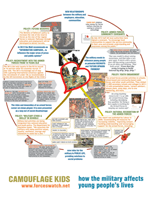
A ForcesWatch poster showing policy, cultural and other recent developments affecting the extent of military influence in young people's lives.
Journeys in the Spirit: Quakers and the military
June 2013
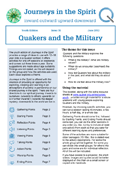
The youth edition of Journeys in the Spirit (number 19) provides a range of ideas to use with 12–18 year olds in a Quaker context.
Militarisation in everyday life in the UK

This event, held in London in 2013, brought together academics, writers, activists and campaigners who are researching, writing, campaigning on, or just concerned about the implications of the militarisation of everyday life in the UK.
The military’s influence in UK education
2013
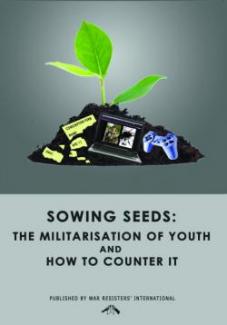
by Emma Sangster in Sowing Seeds: The Militarisation of Youth and How to Counter It, War Resisters International, 2013
‘Catch them young before the army loses them’
2013
by David Gee in Sowing Seeds: The Militarisation of Youth and How to Counter It, War Resisters International, 2013
MoD study sets out how to sell wars to the public
07/10/2013Guardian
Guardian
Families angry at proposal to lower profile of repatriation ceremonies
On Army’s importance, differing views among young and old
03/10/2013YouGov
YouGov
As the British Army struggles to recruit new soldiers, YouGov polling finds that Britons tend to think less of the army's importance the younger they are
The Militarization of Boys
2012

A funny short exploration by a young boy on The Militarization of Boys
Anti-war activists battle to get their voices heard in WW1 centenary events
01/10/2013Guardian
Guardian
Campaigners challenge 'glorious conflict' narrative and plan to highlight treatment of conscientious objectors
Nuclear Weapons and Militarisation in the UK
27/03/2013ForcesWatch
ForcesWatch
A society has to be militarised for a government to justify the development and maintenance of nuclear weapons to its citizens; militarisation creates a culture of acceptance. It popularises military euphemisms such as ‘Defence’, ‘Security’, and – particularly relevant to nuclear weapons – ‘deterrent’, and makes it hard to for those challenging these to be seen as credible.