
military in schools/colleges
Questioning military academies and free schools
This article explains what we mean by 'military academies' and 'military free schools', and explores the concerns that they raise: the lack of evidence that they will raise attainment; that they can employ unqualified teachers; their limited accountability to the local community; the fact that they can set their own curriculum. Crucially, there are various agendas behind military academies and free schools, including providing employment for the growing number of veterans, and encouraging pupils to join the armed forces after they leave school. There is also unease about what military-style discipline would look like in a school environment.
Take arms firms out of the Big Bang Fair
28/03/2014The Guardian
The Guardian
Letter signed by over 100, including ForcesWatch
Gove’s Troops To Teachers ‘A Costly Flop’
04/03/2014Morning Star
Morning Star
Michael Gove's scheme to train ex-squaddies as teachers was labelled an "expensive flop" yesterday after it was revealed the Tory Education Secretary mustered just 132 recruits.
Military-style discipline to raise standards in state schools
28/01/2014The Telegraph
The Telegraph
Former soldiers without degrees will be fast-tracked into teaching and more cadet force units will be established as part of a dramatic expansion of a “military-style” ethos in English state schools
Militarisation in everyday life in the UK: a conference report
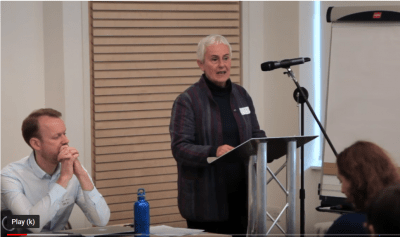
In response to the recent developments in the UK, there has been an increase in critical academic studies, media coverage, and work by campaigning organisations and others on these issues. On 19 October 2013, around 70 academics, activists, campaigners, and writers came together in London at the Militarisation in Everyday Life in the UK conference organised by ForcesWatch.
Presentations from the Militarisation in Everyday Life in the UK conference
November 2013

The Militarisation in Everyday Life in the UK conference was held in London in 2013 and was organised by ForcesWatch. It brought together academics, writers, activists and campaigners concerned about the implications of the militarisation of everyday life in the UK. 12 presentations were filmed. For more details and background reading, see here.
Expand cadet force to encourage youngsters to join forces, defence minister suggests
21/11/2013Telegraph
Telegraph
Britain’s cadet force could be expanded to encourage more youngsters to join the Armed Forces, a defence minister has suggested.
Why are education projects run by ex-services being prioritised?
On 15 November 2013, the Department for Education announced "£4.8 million to projects led by ex-armed forces personnel to tackle underachievement by disengaged pupils".
ForcesWatch has a number of concerns about the military-led 'alternative provision' being developed in schools: who benefits? the armed forces certainly will; military-led 'alternative provision' targets young people seen to be 'failing' - precisely those who need more options and, if channelled into the forces, are most at risk in warfare; the policy is based on limited evidence and ideological assumptions; will there be space for ethical issues around conflict to be addressed?
Camouflage Kids: How the military affects young people’s lives
November 2013
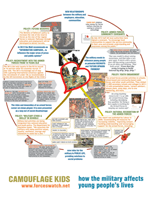
A ForcesWatch poster showing policy, cultural and other recent developments affecting the extent of military influence in young people's lives.
PTSD report finds veterans from disadvantaged backgrounds most at risk
05/11/2013Wales Online
Wales Online
Forces Watch report calls for the minimum age of recruitment to be raised to 18 to avoid exposing the youngest soldiers to the most trauma