Ministry of Defence misleading public over armed forces visits to schools

After several years of work from ForcesWatch and Quakers in Scotland, the Scottish Parliament recognised child rights and welfare concerns around the activities.

The Ministry of Defence have said a number of things in response that are very disputable – this blog outlines some of the evidence.

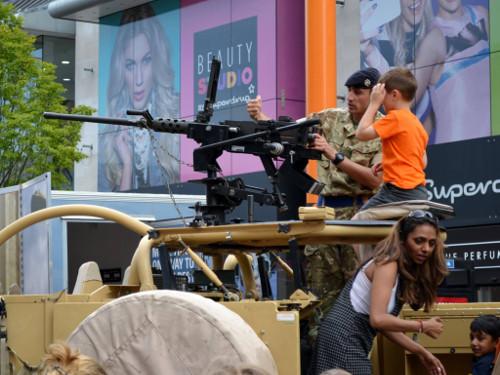
Engaging with young people via Armed Forces Day events is one of many ways in which the armed forces seek to interest kids in signing up – this time (above) –  from a primary school.

An MoD spokesperson said today that school visits ‘are not done for recruitment purposes.’

The Ministry of Defence deny and play down the recruitment agenda of their visits to schools repeatedly in order to mislead and placate the public and prevent public unrest. They are documented as stating that there is a need to distance ‘recruiting’ from other ‘youth and curriculum activities’, and for ‘recruiters’ to ‘package their work as citizenship programmes rather than pure recruiting’ – because of the risk of schools being uncomfortable.

The MoD insists that it cannot be said to recruit in schools as this would constitute the final act of signing on paper.… Read more
Resisting militarisation in Leicester

ForcesWatch: Hi Ambrose! Thank you for putting on such a fantastic event in Leicester at the end of last year as part of the Leicester Human Rights Arts and Film Festival, ‘This is Belonging: Challenging militarism at home and abroad’. We had a lively and informed discussion, and it was great to be able to take part. Could you tell us a bit about how Leicester for Peace is responding to the event’s discussions, and any further comments you have?

Ambrose Musiyiwa: Firstly, thank you for taking part in ‘This is Belonging: Challenging militarism at home and abroad’. Your contribution and the work you and ForcesWatch are doing at a national level informs us and ensures we are aware of what is happening nationally. Your work informs the decisions and actions we take at a local level. We appreciate how supportive of local groups you and ForcesWatch are.

Leicestershire police routinely deploys visibly-armed white men to police low-crime and ethnically-diverse environments.

‘This is Belonging’ looked at both how the army is targeting children in Leicester and other deprived communities around the country, and how communities in Leicester and beyond are resisting the militarisation of school, public space and childhood. Participants who took part in the event alongside ForcesWatch included Leicester city council; the Leicester National Union of Teachers Section of the National Education Union (Leicester NUT Section of the NEU); and Penny Walker and Sue Taylor (Leicester for Peace).… Read more

Ethics not (military) ethos

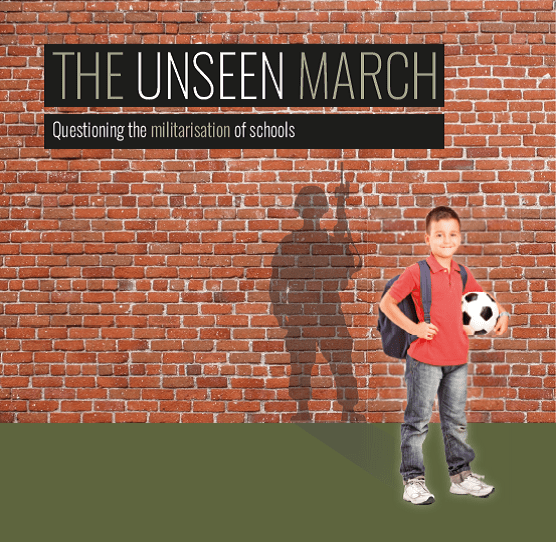
Over the Easter weekend, reports surfaced of proposals to inject schools, particularly those in disadvantaged communities, with a ‘military ethos’. Former education minister Robert Goodwill has been tasked with drawing up a report for the Ministry of Defence (MoD) on the benefits of ‘military ethos’ in schools. Defence Secretary Gavin Williamson has suggested this could include ‘military academies’ in disadvantaged areas.

This is nothing new; similar initiatives have been proposed and developed since 2012. Indeed, we have seen a decade-long promotion of military interests in schools as well as in wider society. While we and others have been monitoring and resisting this, challenging militarist narratives beyond the margins of public debate has proved very difficult. It is vital that mainstream debate starts to challenge military advances into education within an ethics and child rights framework.

Ethos refers to the guiding beliefs, standards or ideals of a group or community. It is the origin of the modern word ‘ethics’ which involves evaluating and interrogating what is morally right or wrong.… Read more

‘Testing the Argument’: MSPs call for report into military visits in Scotland’s schools

The move – announced at a sitting of the Public Petitions Committee last week – came as a direct response to our petition on the issue, along with Quakers in Scotland.

This seeks greater transparency, guidance and parental consultation around military visits to Scottish schools.

In a new submission to the Committee ahead of the hearing we analysed MoD figures, provided under a freedom of information request, which showed that 770 visits were made by the armed forces to Scottish schools between April 2016 and March 2017.

Nearly 60 per cent of these were made by the Army and 75 per cent of the visits promoted a career in the military.

Now a report into the matter is due to be published later this year which we hope will make substantial recommendations given the weight of evidence behind the petition.

Rhianna Louise, ForcesWatch’s Education and Outreach worker. said: “We welcome the promised Public Petitions Committee report on armed forces visits to schools.

“It is vital that the report’s safeguarding proposals take into consideration the evidence submitted by the Scottish Youth Parliament, Connect (formerly Scottish Parent Teachers Council), Together (the Scotland Alliance for Children’s Rights) and Scotland’s Children’s Commissioner.

“Each of these stakeholders has testified to the current lack of adequate safeguards protecting young people from the military having unbalanced access to the education system for recruitment purposes.… Read more

Army abuse case failings: it’s time for change in the military justice system

Three cases involving over 40 claimants and 16 Army instructors have collapsed, raising a number of serious concerns about the way the investigations and trials were conducted within the military justice system.

The result is that serious allegations into abuse of the youngest army recruits have not been tested, and justice – both for the claimants and for the defendants – has not been served.

This unsatisfactory outcome leaves a climate of uncertainty about the incidences themselves, and more broadly about how capable the army is of dealing with abuse claims.

There is a special duty of care necessary for people under 18, the age of the claimants at the time of the alleged incidents. Allegations of this kind, which involve the human rights of minors, demand a far higher standard of investigation than that conducted by the RMP in this case.

The failure of the military to adequately investigate and prosecute the cases will strengthen calls for abuse cases to be dealt with by civilian authorities, particularly if they are serious, involve multiple incidents or claimants, or involve recruits under the age of 18.

The progress of the trial

The cases first came to public attention last year, three years after the incidents of abuse were alleged to have taken place.… Read more

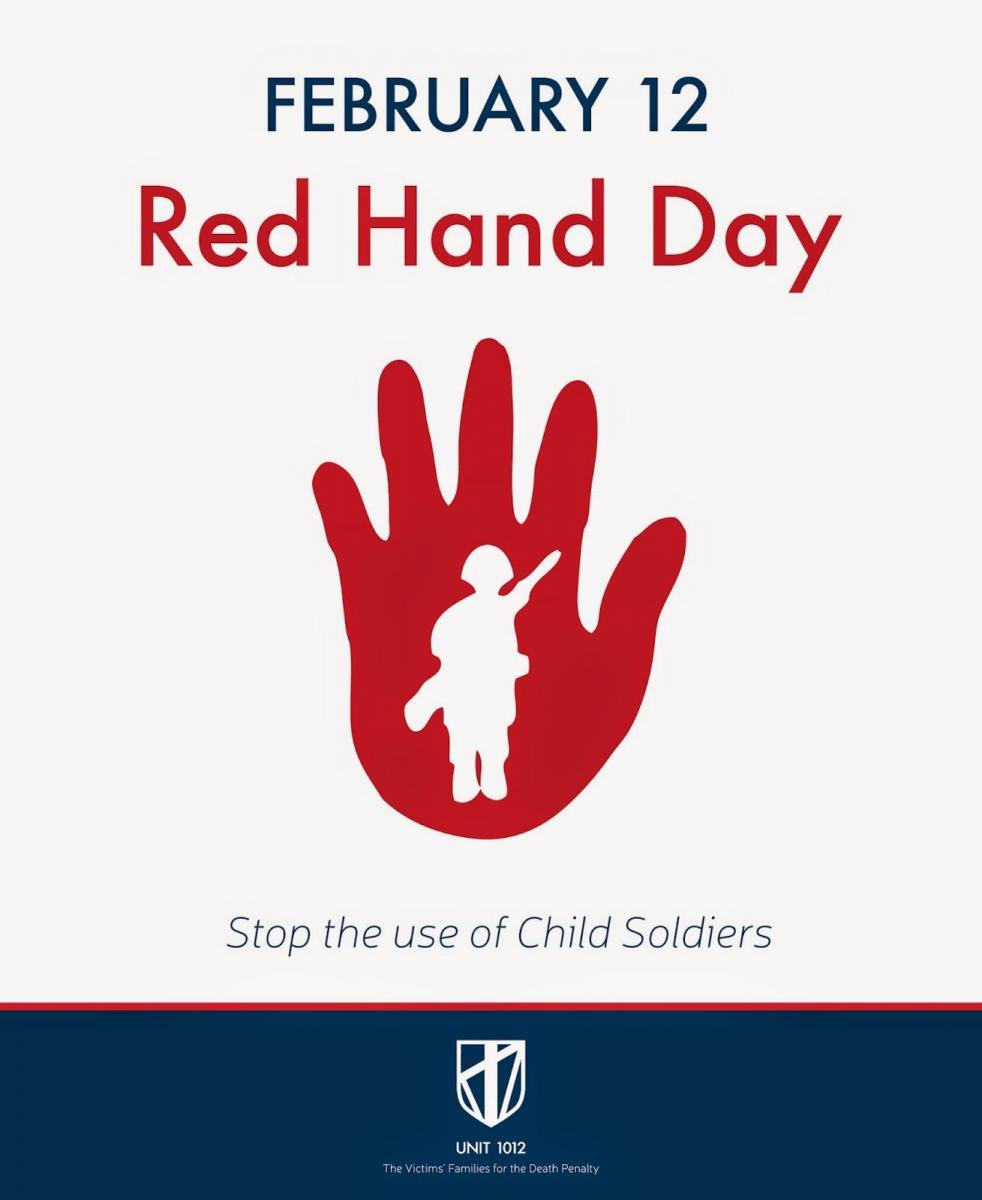
A red hand against child soldiers – the UK should be leading the way not dragging its feet

ForcesWatch are part of the “Zero under 18” or the #MakeIt18 campaign, which aims at the universal ratification of the UN’s Optional Protocol on the Involvement of Children in Armed Conflict.

Although the UK has ratified this treaty, and although we do not deploy soldiers until they are 18, we are under heavy human rights and child right based criticism for continuing to recruit from 16.

In 2016, the UN Committee on the Rights of the Child (UN CRC) reviewed the UK’s implementation of the Convention on the Rights of the Child (CRC) and made a number of important points which we are still bringing to the attention of the UK government today.

Areas of concern raised by the UN CRC were:

  • The State party maintains the wide scope of its interpretative declaration on article 1 of the Optional Protocol, which may permit the deployment of children to areas of hostilities and their involvement in hostilities under certain circumstances;
  • The minimum age for voluntary recruitment as 16 years has not been changed and child recruits makes up 20 per cent of the recent annual intake of United Kingdom Regular Armed Forces;
  • The Army Board endorsed increasing the recruitment of personnel under 18 years old to avoid undermanning, and children who come from vulnerable groups are disproportionately represented among recruits;
  • Safeguards for voluntary recruitment are insufficient, particularly in the light of the very low literacy level of the majority of under-18 recruits and the fact that briefing materials provided to child applicants and their parents or guardians do not clearly inform them of the risks and obligations that follow their enlistment;
  • In the army, child recruits can be required to serve a minimum period of service up to two years longer than the minimum period for adult recruits.
… Read more

‘Selling the Myth’

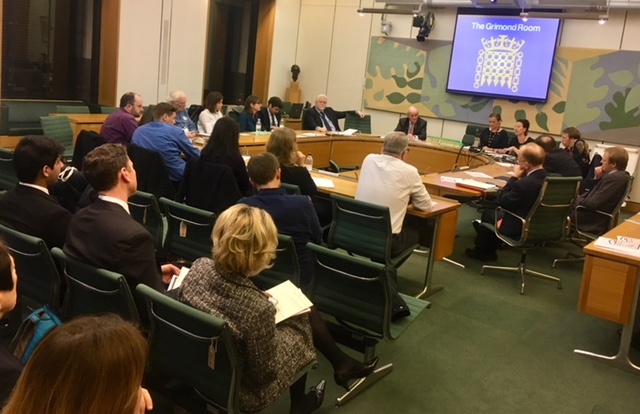
Our campaign to raise the age of military recruitment to 18 was discussed in the Westminster Parliament recently (17 January 2018) before representatives of all the mainstream parties.

The gathering was held under the banner Catch 16: Risks & consequences of enlisting minors into the British Armed Forces.

It was hosted by Liz Saville Roberts MP, who’s party – Plaid Cymru – are supportive of ‘Straight 18’ along with the SNP and the Greens.

Liz Saville Roberts made it clear she was “not against the army per se” but said she was concerned that “we are being sold a myth that the army is the right solution for young people”.

As someone from an educational rather than a military background she also sounded a grave warning – of “a tragedy” linked to age that was likely to occur if the law remained as it is today on the recruitment age.

She was joined by Rachel Taylor, the Director of Programmes at Child Soldiers International, who told the gathering that “the MoD uses 16 and 17 year olds to mitigate shortfalls in infantry”. Nearly one quarter (23%) of army recruits are under 18, yet other countries do not need to rely on this age group.… Read more

An inclusive, emotionally supportive British Army? Not yet.

The new British Army advertising campaign focuses on its ability to ‘emotionally and physically’ support recruits from all backgrounds. It is designed to promote an inclusive image, saying that it is fine to be emotional, to be gay, to be from ethnic minority backgrounds – everyone is accepted and treated well in the Army.

ForcesWatch welcomes any commitments and improvements the military makes to the welfare of soldiers. If the British Army is truly to be ‘the best’ then it must treat its personnel with dignity and respect and it must champion human rights.

However, we caution that the reality of military life is not accurately represented in this new campaign, and that the welfare of the core group of recruits into the Army should not be overlooked.

The British Army is struggling with recruitment, but it is also struggling with retention. Improving the conditions for soldiers, and recruiting an adult-only force, would improve retention rates and save money. This would be far better than continuing to splash out on expensive and often unpopular recruitment advertising campaigns.

What’s behind this new campaign?

While the core recruitment pool for the British Army is white, young, male and working class, they are seeking to diversify their intake by recruiting more females and more black, Asian and ethnic minority people.… Read more

Only ‘Show and Tell’? Latest news on Scottish Parliament Petition

Members of the Scottish Parliament have decided they need to hear more from ForcesWatch and Quakers in Scotland before making decisions about our petition calling for greater guidance and scrutiny around military visits to schools.

After taking oral evidence from the armed forces and the MoD in person on 9 Nov 2017, Holyrood’s Public Petitions Committee agreed that we should be allowed to respond before MSPs consider further steps.

The Committee – in a session on the petition lasting over an hour – quizzed four senior military officers, one from each Service and the MoD.

The public was not allowed to see witnesses’ faces after Parliament accepted a plea concerning personal safety fears (despite some of those giving statements walking to Holyrood in full uniform).

There was also a shake-up in Committee membership – with Michelle Ballantyne, who won a by-election for the Conservatives earlier in the year, replacing party colleague Maurice Corry.

Another Conservative MSP – Edward Mountain – was also present to ask questions. MSPs are allowed to attend any Committee meeting in which they have an interest, but may not take part in decision making.

At no point did any witness giving evidence from the armed forces say that the proposed modest changes suggested in the petition would have a negative or disproportionate effect to the military in terms of recruitment or any anything else.… Read more

Dissenting from the Old Lie

If you could hear, at every jolt, the blood
Come gargling from the froth-corrupted lungs,
Obscene as cancer, bitter as the cud
Of vile, incurable sores on innocent tongues,
My friend, you would not tell with such high zest
To children ardent for some desperate glory,
The old Lie; Dulce et Decorum est
Pro patria mori.
From Dulce et Decorum Est by Wilfred Owen

Matt Haig, an author perhaps best known for his books Reasons to Stay Alive and How to stop time and his work to support people with depression, recently entered the annual Great British Poppy Debate, saying:

‘I’m not wearing a poppy this year. I think it is shifting from a symbol remembering war’s horror, to a symbol of war-hungry nationalism.’

Scrolling down his Twitter feed, you can see some of the vitriol directed towards him and those who are making the same choice. Most common were remarks along these lines: ‘People died for your freedom, your rights and your family’s rights (you should wear a red poppy out of respect and gratitude to them).’… Read more